Article: How a Meteorite Dial is Made | The Process of Slicing a Meteorite to 0.4 Millimeters to Reveal Its Patterns
How a Meteorite Dial is Made | The Process of Slicing a Meteorite to 0.4 Millimeters to Reveal Its Patterns
The Geminid meteor shower is expected to reach its peak on the night of December 14. During this season, when we find ourselves looking up at the night sky more often, we would like to tell you the story of a watch with a meteorite dial that traveled from space to Earth.
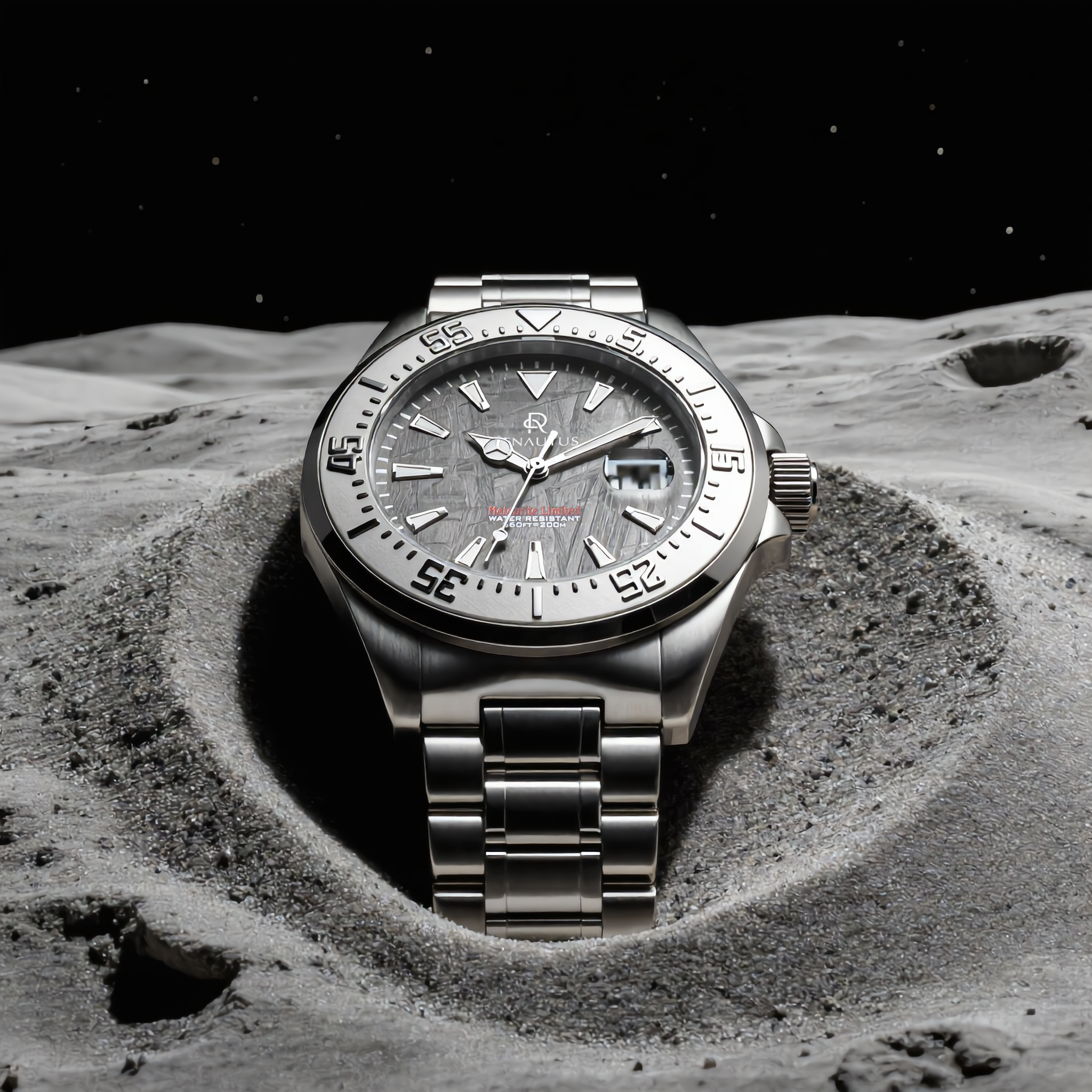
Meteorite dials are striking for their mysterious line patterns in photographs. However, where these patterns come from and how they are transformed into a single dial may not be widely known. In this article, we will introduce the process of creating Renautus meteorite dials and the key points to consider when choosing one.
Meteorites: Rocks and Metals from Space
A meteorite is a rock or metal that has fallen to Earth from space. While most shooting stars that shine and disappear in the night sky are small particles that burn up in the atmosphere, some survive the journey to reach the ground. These are meteorites.
Meteorites are mainly divided into those made of rock and those containing a high proportion of metals such as iron and nickel. The meteorite used for watch dials is an iron meteorite, which contains a high proportion of metal. When polished to smooth the surface, it reveals a subdued metallic luster and unique patterns formed by nature.
Until now, meteorite dials have been a material used exclusively by a limited number of Swiss manufacturers. As a new Japanese brand, Renautus took on the challenge of incorporating this material into its products.
The Muonionalusta Meteorite Used by Renautus
Renautus uses the Muonionalusta meteorite, which is known as an iron meteorite discovered in northern Sweden.
The meteorite market contains many imitations. For this reason, Renautus sources its material directly from raw meteorite. We believe that knowing each dial is cut from genuine meteorite provides peace of mind for both the giver and the wearer.

The Craft of Cutting to 0.4 Millimeters
To turn a meteorite into a dial, it must be cut to a thickness of just 0.4 millimeters.
The Muonionalusta meteorite is rich in iron and is a relatively soft material. Cutting such a material thinly and flatly requires processing based on a deep understanding of the properties of metal.
Renautus originated as a precision metal processing company in Nara Prefecture. The knowledge and experience accumulated through years of manufacturing parts are directly applied to this process. We do not consider the mere passage of time to be valuable. We believe a craftsman's job is to consistently achieve high precision within a limited timeframe.
Bringing Out the Patterns and Protecting Against Rust
Patterns That Are Not Visible Until Cut
The line patterns on a meteorite dial are called the Widmanstätten structure. These patterns were formed as the metal crystals cooled slowly over an extremely long period in space.
Surprisingly, these patterns are almost invisible immediately after the meteorite is cut. They only emerge after the surface is treated with a special solvent.
Oxidation Begins the Moment It Is Cut
Meteorites rich in iron begin to oxidize the moment they are cut. Because this would cause rust, Renautus has developed a clear coating that prevents rust without compromising the meteorite's natural texture.
Applying this technology, we also offer colored meteorite dials in silver, blue, and gold.

How to Choose a Dial Where No Two Patterns Are Alike
A meteorite's appearance changes depending on the section and angle from which it is cut. No two patterns are ever the same. Therefore, when choosing a meteorite dial, we recommend comparing not only the color but also the patterns themselves.
- The Direction and Density of the Lines: Some have fine lines intersecting closely, while others feature broad bands running gently across the surface. The overall impression changes significantly.
- Natural or Colored: Consider whether you prefer to enjoy the natural metallic luster of the material or add character with color.
- The Combination with the Hands and Strap: Since the pattern is the main feature, using subdued colors for the other components will make the dial stand out.
The "Aqua Ocean Meteorite 40-Piece Limited Custom Model" is a collection that allows you to customize the Aqua Ocean 45 Automatic with one of only 40 Muonionalusta meteorite dials produced. The dials are available in two versions: Natural (Clear Coat), which highlights the material's bare luster, and Blue Coat, which is finished in blue. The movement is the MIYOTA 8215, housed in a 45-millimeter case. Our proprietary simulation allows you to compare the patterns of each dial and choose the case, hands, and strap.
Summary
- A meteorite is a rock or metal that has fallen to Earth from space. Meteorite dials use iron meteorites with a high metal content.
- To avoid imitations, Renautus sources Muonionalusta meteorite directly from raw material.
- Dials must be cut to a thickness of 0.4 millimeters, a process that relies on metalworking expertise.
- The Widmanstätten structure only emerges after the surface is treated with a special solvent.
- A clear coating has been developed to prevent rust without compromising the material's texture.
- Since no two patterns are alike, we recommend comparing the patterns themselves when choosing.
Wear a pattern formed over a long period in space on your wrist every day. Whether for yourself or as a gift for someone special, why not choose a one-of-a-kind dial?